AI builds the UI. UXRay catches the mess.
Real screenshots, structured UX issues, and repair prompts your coding agent can act on. Then a before/after scorecard proves the UI actually improved.
Real fixture evidence
click any screenshot to zoom
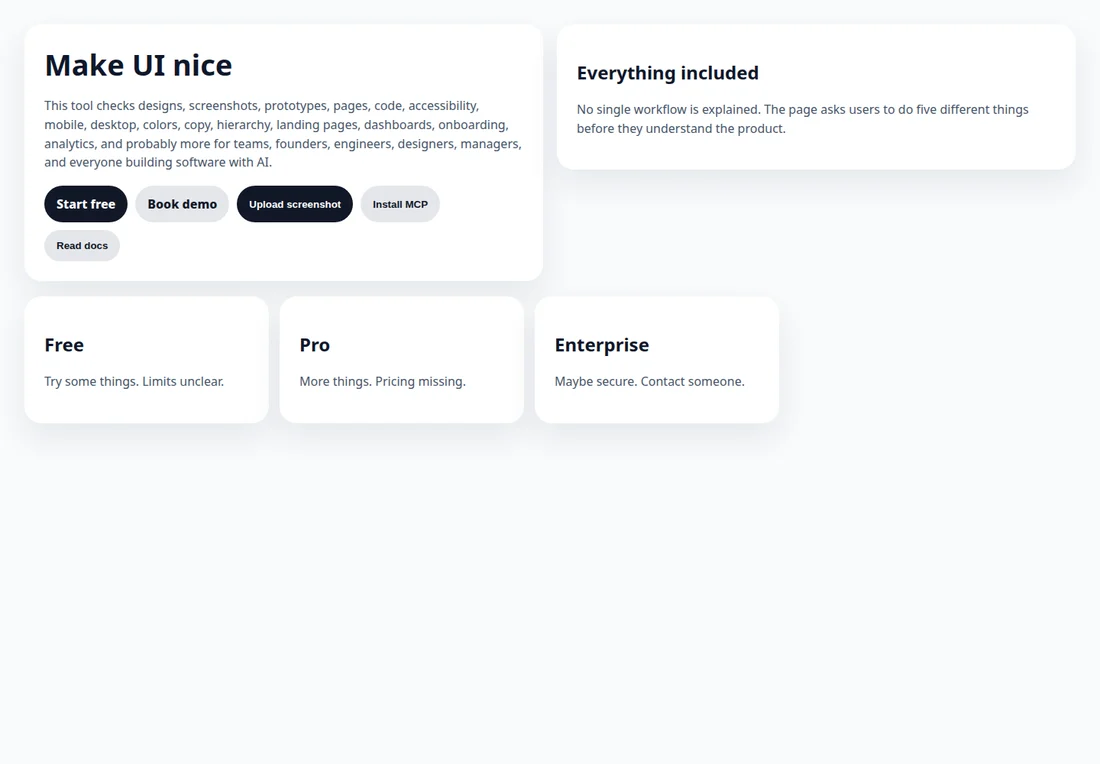
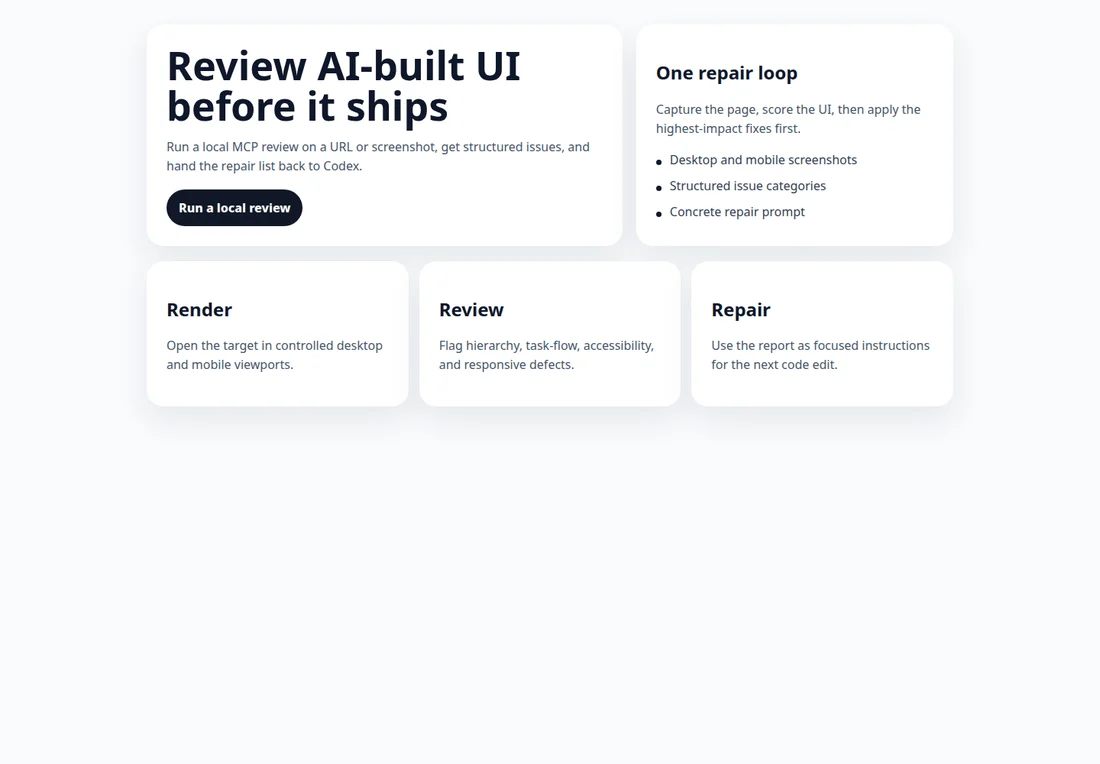
Same fixtures. Same reviewer. Same environment.
UXRay reset three flawed AI-generated screens, reviewed them locally, let Codex repair with MCP screenshots, then reviewed again. The gallery shows the actual screenshots from that run, plus more scenarios you can install and run locally.
Agents already know the path.
UXRay plugs into the tools builders use: Codex, Claude Code, MCP clients, local APIs, and CI-style repair gates.
Review → repair → diff.
Render the UI
Desktop and mobile screenshots, DOM text, headings, buttons, links, forms, and overflow signals.
Tell the agent what broke
Severity, category, evidence, affected area, and a focused repair prompt.
Measure the fix
review_ui_diff compares score, issue count, high-severity count, and fixed categories.
Use it where your agent already works.
npm install
npm run typecheck
codex mcp add uxray -- npm --prefix "$PWD" run mcp
npm run demo:pipeline
Cloudflare hosts the public site and account shell. Full URL rendering runs locally today because it needs Chrome/Playwright. Hosted paid calls should run on a browser-capable backend.
Start local. Pay when reviews run hosted.
The wedge is free MCP for builders. The paid layer is hosted screenshot rendering, API review calls, team seats, and plugins that keep agents from making the same UI mistakes.
Run UXRay as local MCP with Codex or Claude Code.
InstallHosted review credits, saved reports, MCP config, plugin packs, and priority scenarios.
Pay ProShared workspaces, CI gates, review budgets, and private UI rule packs.
Start team checkout